суббота, 26 ноября 2016 г.

Sights of the village Aginskoe

1. Monument Gombozhab Tsybikov  

The Aga name Tsybikov National Museum, a monument Gombozhab Tsybikov - educator, traveler and explorer of Central Asia and Tibet. On a high pedestal of stone, symbolizing the mountain - a huge granite boulder with a bronze bas-relief Tsybikov. On the stone knocked route scientist through Kyakhta, Urga, Gobi, Lavran, Gumbum to Lhasa and a caravan of camels. In a free-standing marble slab with an ornament - a bas-relief portrait and the inscription: "Gombozhab Tsybikov (1873-1930), Russian traveler, explorer of Tibet." The monument was erected in 1973 to mark the centenary of the birth of the scientist. Granite blocks, similar to the one on which the pass in the Himalayas Naychzhi-La after losing hope to stay alive, he left an inscription, a reminder of "25/06/1900. Russian citizen G. Ts ", found on a mountain in the vicinity of Chita. Marble slabs brought from Sayanogorsk. Author bas unknown.

2. Tank T-34 

For the public garden of the school number 2 at the intersection with the street that bears the name of Tsybikova, set T-34 tank. On the pedestal the inscription: "selfless deed agintsev in the rear and at the fronts of the Great Patriotic War." Tank column "Aginskiy farmer", built at the expense of workers' district, as part of the 64th Guards Tank Brigade fought heroically in battles in Prokhorovka in July 1943.Just behind the tank County Courthouse. Across the street (Bolshaya Rinchino, 75.) - The building of the printing house, which houses the editorial offices of newspapers "Aga truth" and "Tolon".

3. Aginskiy datsan "Dechen Lhundubling" ("abode of spontaneous realization of great bliss" bur Agyn Khiid.) - a Buddhist monastery complex (datsan), is the largest Buddhist community in the Trans-Baikal Territory.
Located in Amithasha village, 6 km south-west of the central part of the village Aginskoe. It refers to the Buddhist Traditional Sangha of Russia.

4. St. Nicholas Church
The church with a bell tower was built on the initiative of P.A. Badmaeva, organized the delegation with a petition to the Emperor
about securing land for the construction of an Orthodox church. With the petition has been delegated MA Zubov and baptized Buryats of Tsugola, whose name was not found. In the capital, with the help of Peter Badmaeva and Count Yusupov representatives Aga were taken by Nicholas II. From Emperor was received blessing and allocated 10 thousand rubles. The temple was founded in 1897, construction was completed in 1903, two years later the church was consecrated. parochial school was opened at the church.
   St. Nicholas Church stood safely until 1930. At the beginning of 1930 the church was closed, were removed all icons and utensils, and the priests sent into exile in the Krasnoyarsk region. Crosses and domes were dropped, bells removed and taken away. Deserted Temple remained so until 1936. In October 1937, the decision of the CEC of the Buryat-Mongolian ASSR temple building was given to the department of culture. That same year, the bell tower was destroyed and dismantled the main dome. The building was constructed wooden stage, and open theater "Aga", later renamed "October". Movies are shown until 1984. After the construction of the new theater building of the St. Nicholas Church was transferred from one organization to another. Moreover, each institution rebuilds the interior again. June 26, 1991 decision of the District Council of People's Deputies of the building of St. Nicholas Church transferred the Orthodox community formed the year before. After a renovation in November of the same year, it began service again. Today it is completely restored bell tower, there is a mounting columns and restoration of the main dome 29 meters in height.

5. Monument Babzha-Baras-Baatar
     Babzha-Baras-Baatar - legendary Buryat-Mongolian Taishi (Prince). He fought against the Manchu aggression in the XVII century.
     Many myths and legends associated with the name of the legendary Buryat-Mongol Taishi (Prince) Babzha Baras Bator. There are some traditions that characterize the origin of names in the mountains Age (Trans-Baikal region) and in the area of the Republic of Buryatia Mukhorshibirsky: Baatar Hada  and Baataray Hada (mountain warrior-heroes and the mountain). The name Mount Bator, located on the left bank of the Onon river, near to. Budalan, according to legend, is also named after a hero of the Buryat.
    Once Babzha Baras Bator with his brother Hondoli drove a herd of Manchuria. They have forwarded a herd through the Onon River. On the hill in the countryside Budalan stabbed one mare and started to fry the meat on skewers. At this time arrived, the pursuit of Manchuria led by their soldiers. They stopped on the south bank of the Onon and saw brothers who sat and ate meat. Manchurian soldiers asked the brothers to smoke, since they all went in the way tobacco. Babzha Baras Bator tied the pouch to your arm and let go of the string. The arrow flew through the Onon and fell near the Manchus. The Manchus lit and thanked the brothers. After that, they suit Babzha Baras Bator pouch strapped to the arm, and shot one of the Manchus. Arrow, before reaching the other side, fell into the river. Babzha Baras Bator and Hondoli Manchu laughed and said, "Your arrows  for children, and you can fight only with children, but not with Bator, as we."
Frightened Manchus turned their horses back and went home with nothing. Since then, the mountain on which the brothers were Bator, has been named in their honor Bator. This mountain is on the left bank of the Onon and is the highest in those places. Mountain, which is located on the right bank of the river, called Eheree (Rus. Turn back, return).
6. Sculpture "Budamshu" - the image of the Buryat folk character to the goat - installed in 2008 in front of a live cultural center "Amar Sain" in the village Aginskoe Zabaikalsky Krai. Sculptor - People's Artist of Buryatia Gennady Vasilyev.
7. Sculpture "Balzhin-hatan" ("Princess of Glory")
    The leader Aginski Buryats great Khorinsky Princess Balzhin-Hatan strong warrior spirit, protector of his people. In the history of the Buryat Horinsk Balzhin Hatan is a unique individual, whose merit lies in the consolidation of the Buryat tribes under a single start and instilling elements of statehood.
    Sculpture installed at the entrance to the village Aginskoe Zabaikalsky Krai.

The history of  Aginskoe
   Aginskoe (Aga bur.) - Settlement of city type of the Agin-Buryat Okrug in Russia Trans-Baikal Territory. Located 153 km south-east of the regional center, the city of Chita, in the federal highway A350, on the left bank of the Aga River (left tributary of the Onon). The nearest train station - 36 km to the north-east in the urban village Mogoitui.
    Population - 17,708 people.
   Locality originated in 1811, and the first mention of the village is related to the time when the representatives of eight genera Khori-Buryats of the Baikal region in the XVII century separated and moved to Agin steppe in river valleys Ingoda, Aga and Onon. Gradually, most of them focused on the Aga River, rich in pasture. With the creation of the new administrative-territorial structure tayshetstva it was necessary to find a permanent seat of the Office of the Chief Taishi. The most suitable place turned out to be occupied now Aginsky village. There were some tents: for the main taisha, offices, clerk, clerk, coachmen. Then put yurts, each clan - his own, and formed Haughton - Yurt settlement.
  An event of great importance was the construction and commissioning in 1897-1901 years Manchurian branch of Trans-Siberian Railway (south course ZabZhD), which took place on the territory of the steppe Agi 37 km east of Aginski. Active participation in the construction and took locals.
   Steppe Duma lasted until 1903. Instead, her two parish were created - Aga and Tsugolsky. Tribal councils were called Buluk, tribal elders - Goolwa. Aginskoe turned into a big village.
   In Soviet times Aginskoe continued to expand. In 1921, a hospital with 10 beds was opened. In 1927, country club with a library was built (now the House of children's creativity). Two years later, in the homes appeared the radio. In 1930, the first issue of the newspaper aimak "Hamtyn azhalsha". Top students (in a two-storey wooden building) took Aginskiy Pedagogical College. In 1936 put into operation a steam mill across the river Aga. Two years later, a brick building built under power.
   During the Great Patriotic War Aginskoe turned into a headquarters for the relief front, to organize the sending of men, horses, warm clothing.
  Since 1965 began a new stage in the development of the village. We build houses, shops, kindergartens. Were put into operation Creamery, substation, forestry, industrial combine, procurement agency with sausage shop. In the center of the village appeared the House of Culture, 16-apartment buildings, public services complex, stadium, state bank, the new housing district hospital. In the western part - apartment buildings, bus station, petrol station, building vocational school. Broken Central Park garden, the village began planting.
  Today Aginskoye - modern well-maintained village, the administrative center of Agin-Buryat district. Here are concentrated the executive, legislative, judicial district authorities, departments of federal structures. The village is not a multi-storey, with entire neighborhoods of one-storey wooden houses. In recent years, there are many beautiful administrative buildings, sport House, Internet center, hotels and restaurants.
   It changed not only the center but also outskirts. A monument to the legendary Babzha-Baras-Baatar, pedestrian wooden bridge over the river Aga, the arch at the entrance, small architectural forms in the national style. Restored in the same architectural style St. Nicholas Orthodox church and a complex of Aginski datsan.

   The first feature short film in the village Aginskoye - "Losar". year 2014. Chita region, Aginskiy Buryat Okrug, city district village "Aginskoye". Young photographer comes in winter village with his first task - to make an overview of contemporary life Agin Buryat, in the light of the coming of the Buddhist New Year "Sagaalgan" also known as "Losar". Director: Dabaev Daba. Creative producer: Andrey Goryunov. Operators: Dabaev Daba, Bazarov Bulat. Sound Engineer: Dorzhiev Erdem.

    In this post I will tell you a little about my native land. Aginskiy district of Zabaikalsky Krai - this is the place where I was born and raised.
History Aginski District.  
     Aginskiy district of (drill Agyn aimag.) - Administrative and territorial unit (district) and municipal (municipal district) composed of Agin-Buryat district of the Trans-Baikal Krai of the Russian Federation.
    The administrative center - an urban village Aginskoye.
    In 1648, Agin Buryat adopted Russian citizenship. After this, the Russian colonization of the area, mainly the Trans-Baikal Cossacks.
  April 27, 1921 as part of the DDA established Buryat-Mongolian autonomous region with the center in Chita, which included 4 aimag: Aginskiy, Barguzin, Khorinsky and Chikoysky.
    May 30, 1923 the Buryat-Mongol Autonomous Soviet Socialist Republic (ASSR BM) was formed, uniting Buryat-Mongolian Autonomous Okrug and the Mongol-Buryat Autonomous Okrug, centered in Verkhneudinsk. From 1930 to 1936 BM ASSR was part of the East Siberian region.
    December 5, 1936 after the separation of East-Siberian region Aginskiy aimag becomes part of BM ASSR (the capital - Ulan-Ude). September 26, 1937 the CEC of the USSR by a regulation included in the district of Aginskiy Aginski Buryat-Mongolian National District (1958 - Agin-Buryat Autonomous Okrug). On March 1, 2008 in the merger of the Chita Region and Aginski Buryat Autonomous Okrug  became district of the Zabaikalsky Krai.
   Geography: Agin-Buryat Autonomous Okrug was located in Eastern Siberia, in the south-east of the Trans-Baikal. Area  - 19,6 thousand square meters.. The territory of the okrug is located within the low-middle mountainous relief, the rivers Onon and Ingoda; the highest point in the territory, which had been held Autonomous Okrug is Alkhanay mountain (1663 m).
    At present the population of 17253 people.
With the 2014 Aginskiy district 22 settlements consisting of two urban and eleven rural settlements:

№
Urban and rural settlement
Administrative center
Number of settlements
1
Urban settlement «Novoorlovsk»
Novoorlovsk
1
2
Urban settlement «Orlovsky»
Orlovsky
3
3
Rural settlement «Amithasha»
Village Amithasha
2
4
Rural settlement «Budulan»
Village Budulan
2
5
Rural settlement «Guney»
Village Guney
1
6
Rural settlement «Kunkur»
Village Kunkur
3
7
Rural settlement «Sakhyurta»
Village Sakhyurta
1
8
Rural settlement «Suduntuy»
Village Suduntuy
1
9
Rural settlement «Urda-Aga»
Village Urda-Aga
4
10
Rural settlement «Hoyto-Aga»
Village Hoyto-Aga
3
11
Rural settlement «Tsokto-Hangil»
Village Tsokto-Hangil
1
12
Rural settlement «Chelutay»
Village Chelutay
2
13
Rural settlement «South Аrgala»
Village South Argala
3


среда, 16 ноября 2016 г.

Instruction "How to get to the audience from stop Campus".
1)Come to the traffic lights and push the button;
2) Wait for the green light and cross the road;
3)Without turning to go forward, go to the territory of the institute;
4) Cross the square and go to the institute building;
5) Get the guard, to show the document and  go to the left until the end of the corridor;
6)Go down the stairs, go to the first door to the right audience.


воскресенье, 6 ноября 2016 г.

      How  many can remember always I wanted to open his own business. I think it's quite possible to be some nice little cafes. The café people will be able to come to escape from the hustle and bustle, spend time in a relaxed atmosphere. So I present to you a business plan coffee shop "Comfort".

суббота, 5 ноября 2016 г.

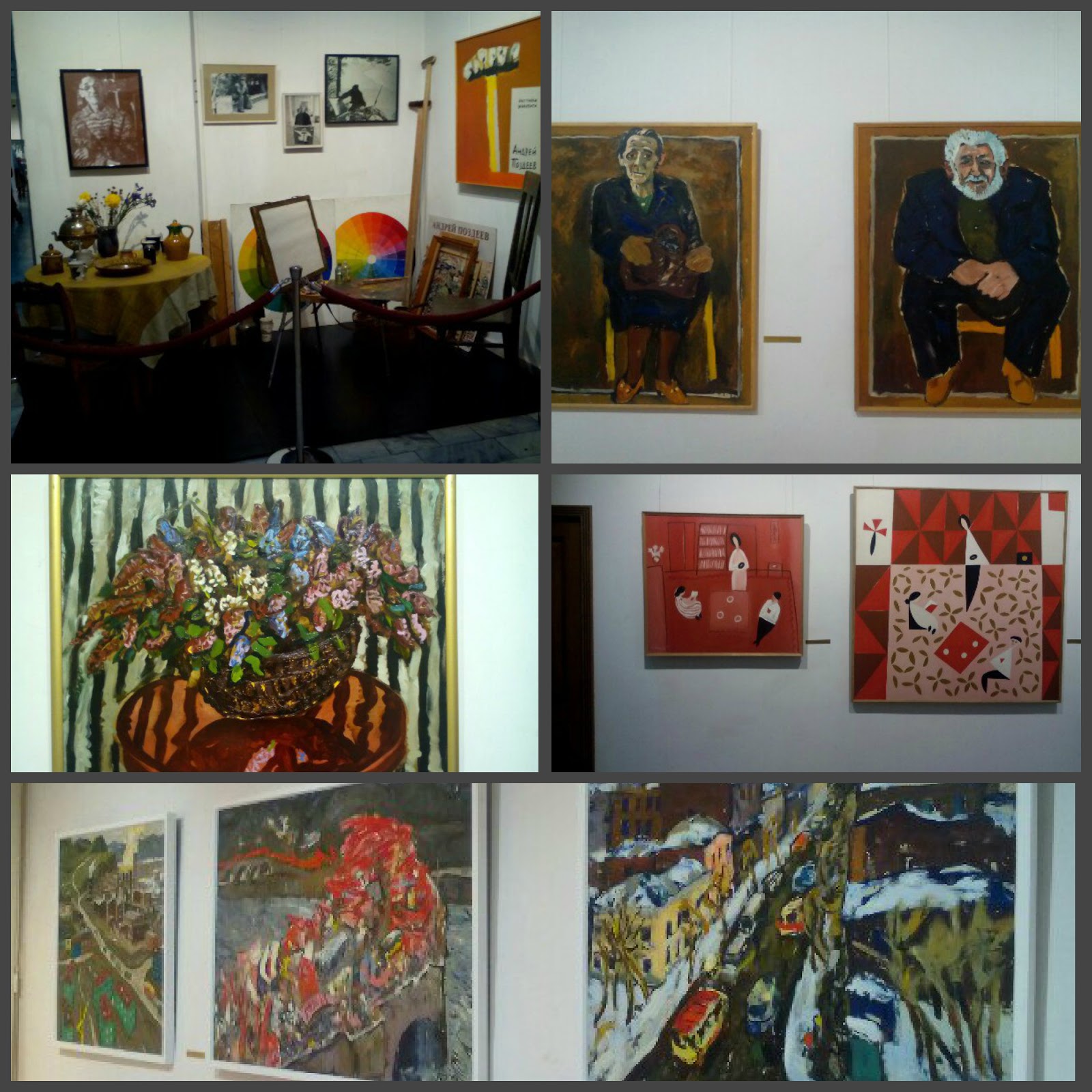
      In the first days of November was held in Krasnoyarsk "Night of the Arts", where the doors are wide open to anyone who wants to visit it. And this event does not leave me in the side.
  I visited the Krasnoyarsk Art Museum. Surikov, where "Night of Art" was devoted to the work of the famous artist Andrei Pozdeyeva. He wrote: "Fine art is not a profession. It is life. The reflection of my self." His paintings are multi-faceted and full of vitality. Particular attention is paid to the human way of the artist. He painted what is around him, portrayed landscapes.
The exhibition could not only admire the paintings, but the museum and play bingo or his companion to try to draw a portrait of each other. Also, visitors can learn more about the life Pozdeyeva, watching a documentary about him. In addition to the memory you could buy souvenirs, for example, a mug, T-shirt or some other icon.


        The other day I visited the Krasnoyarsk Book Fair, I had not paid much attention to this event. However, I got a lot of impressions of what was presented and how it's nice thought, from the atmosphere that was there.
        At the fair were presented various genres of literature, not only Russian but also foreign. Moreover fair program is designed both for an adult audience, and in the nursery. There were a lot of literature, aimed at the development of children. Also took classes for children in the form of informative and entertaining games. 
        In addition to the books there were various national souvenirs, amulets, jewelery and paintings. And most of all I got interested in the little book that is literally fit in the palm. I think this is a very original and cool. 
        In general, the campaign for the fair to say that I did not regret it, and made to a conclusion that it is  to attend such events more often.